
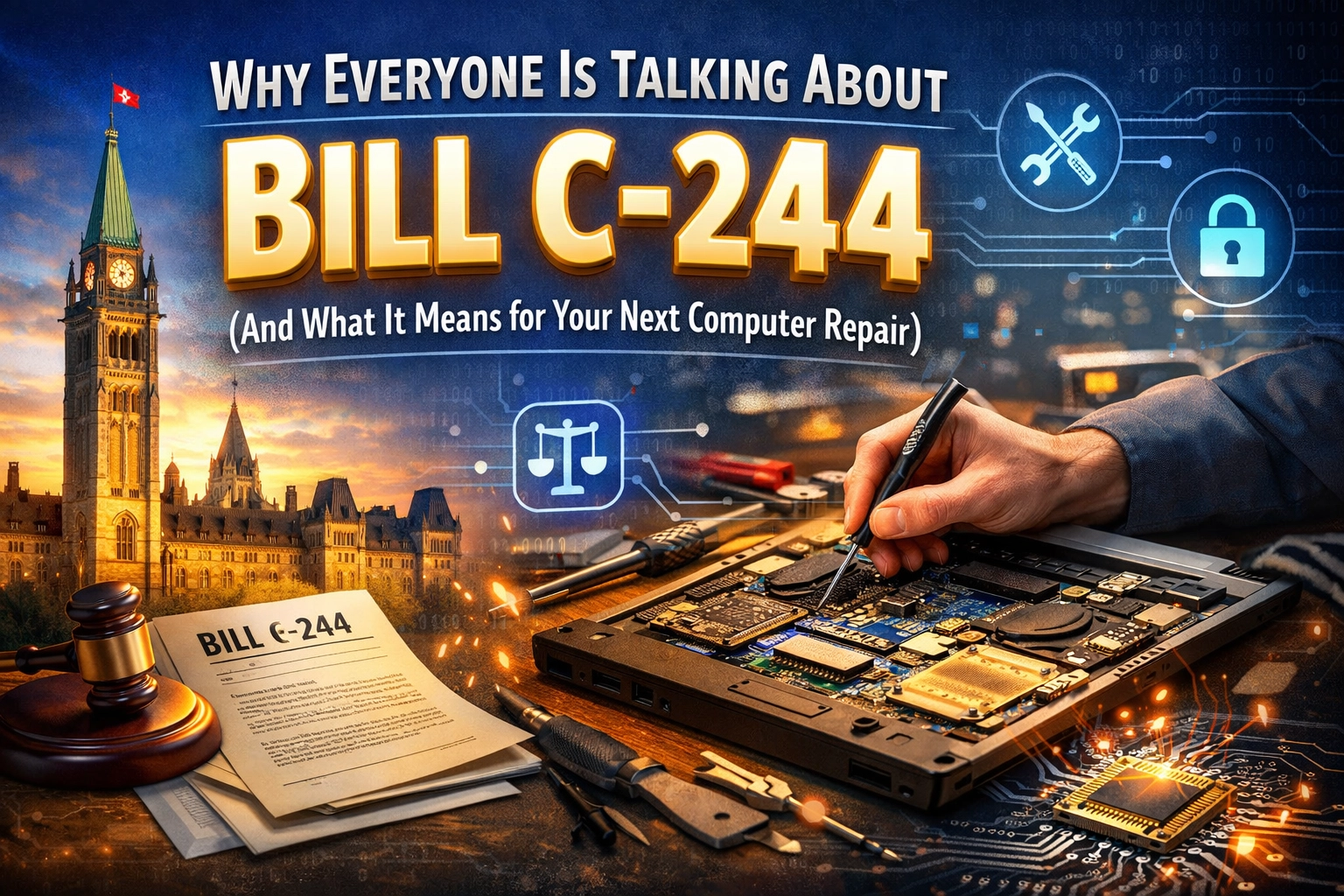
If you’ve spent any time driving between Raymond and Lethbridge lately, you know that things around here move at their own pace: usually dictated by the wind or the harvest. But in the world of tech, things have been moving at lightning speed, and not just in terms of processor ghz. There’s a buzz in the air that’s even louder than a chinook blowing through a screen door.
I’m talking about Bill C-244.
Now, I know what you’re thinking. “Cody, I come to you to fix my cracked screen or speed up my sluggish laptop, not for a civics lesson.” I hear you. But trust me, this piece of legislation is the biggest win for folks like us: the tinkerers, the budget-conscious families, and the environmentally-minded neighbors: in decades.
As of March 2026, we’re finally seeing the full-force impact of changes that became official on November 7, 2024, when Bill C-244 received Royal Assent and was enacted as part of the Statutes of Canada (S.C. 2024, c. 26). That’s the “it’s real now” stamp. And it’s changing the game for computer repair in Lethbridge and beyond.
So, grab a coffee, pull up a chair, and let’s talk about why this “Right to Repair” victory is such a big deal for your gadgets and your wallet.
The “Digital Lock” Dilemma: What Was the Problem?
For years, manufacturers have been playing a bit of a “keep away” game. You’d buy a high-end laptop or a smartphone, but you didn’t really own the software running it. Manufacturers would install what are called Technological Protection Measures (TPMs).
In plain English? These are digital locks—and they’re exactly the kind of locks the Copyright Act used to treat as “hands off,” even when you were just trying to fix the hardware you already own.
Imagine buying a truck, but the manufacturer puts a specialized padlock on the hood that only their mechanics have the key to. If your engine light comes on, you can’t even look inside to see if it’s just a loose wire. You’re forced to go to the dealership, pay their premium prices, and wait on their schedule.
In the tech world, these TPMs prevented independent shops like Second Wind Sales and Services from accessing diagnostic data or software-locked components. If we tried to bypass those locks to fix your machine, we were technically dancing on the wrong side of copyright law.
Pro-tip: For years, “authorized” repairs were often just a way for big companies to push you toward buying a new device instead of fixing the one you already love. We call that “planned obsolescence,” and it’s been the bane of my existence.
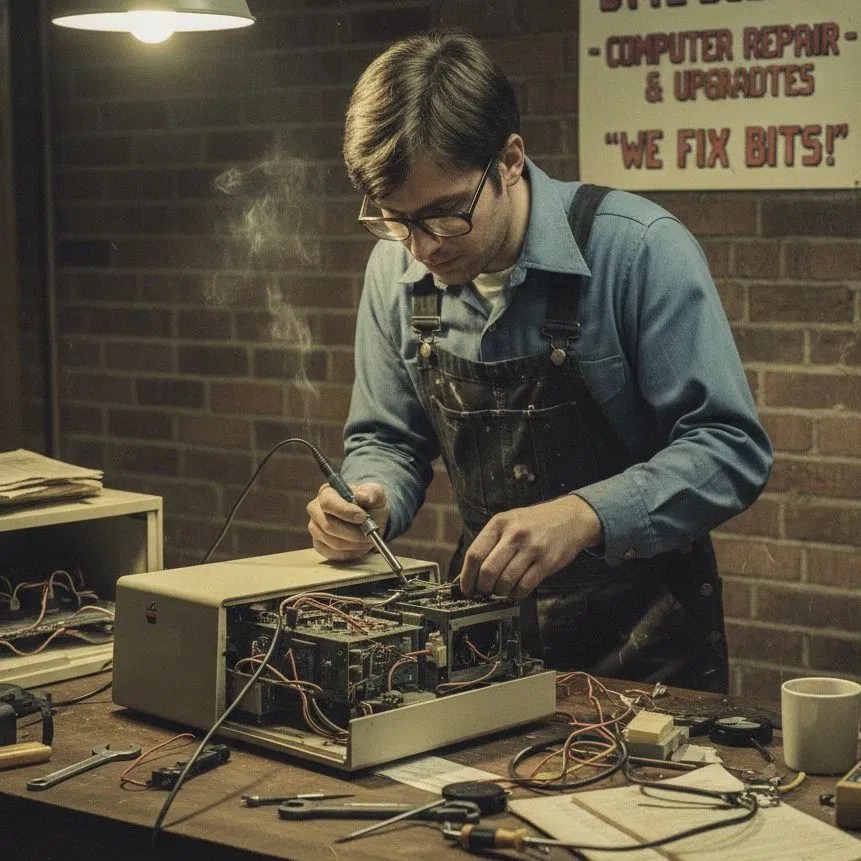
What Bill C-244 Changes (The Good Stuff)
Bill C-244 amended the Copyright Act to create a clear exception that allows the circumvention of Technological Protection Measures (TPMs) when the purpose is diagnosis, maintenance, or repair of a product.
That’s the key detail: this isn’t a vague “right to repair” slogan. It’s a targeted Copyright Act change that says: if a digital lock is standing between you and a legitimate fix, bypassing that lock for repair purposes is no longer the legal minefield it used to be.
This is huge. It means that as of now, in 2026, it is officially legal for me to “pick the digital lock” to figure out why your MacBook isn’t charging or why your gaming console is acting like it’s possessed.
And here’s the real “defining” part for everyday folks: this change helps decouple intellectual property from the physical right to fix hardware. In other words, respecting copyright doesn’t have to mean “sorry, you can’t repair your own device.” You can protect IP and still let people fix their stuff. Like most things around here, it’s just common sense when you say it out loud.
Here’s why this is a win-win for everyone in Southern Alberta:
- Lower Costs: You aren’t held hostage by manufacturer pricing. We can often find more affordable ways to get you back up and running.
- Faster Turnaround: You don’t have to ship your laptop away to a depot in another province. You can drop it off here in Raymond and have it back much sooner.
- Sustainability: This is the core of our “Second Wind” philosophy. Every device we fix is one less piece of lead and lithium sitting in a landfill.
- Ownership Rights: If you bought it, you should be able to fix it. Period.
Why Independent Shops Are Celebrating
At Second Wind, we’ve always been about giving tech a “second wind.” Whether it’s a professional laptop repair or just a simple tune-up, our goal is to keep your gear in your hands and out of the trash.
Before Bill C-244, there were “grey areas” that made it difficult for independent shops to offer certain advanced services—especially when a repair required bypassing a TPM just to run proper diagnostics or complete a legitimate fix. Now, the path is clearer. This is a win for independent repair shops like Second Wind because it reduces that awkward “are we allowed to do this?” liability cloud when we’re bypassing digital locks for legitimate diagnosis, maintenance, and repair.
Pro-tip: Most of the time, the “lock” isn’t protecting you—it’s protecting a business model. Bill C-244 helps bring repair back into the realm of normal, reasonable ownership.
I’m not a miracle worker (though I have been called a “tech wizard” once or twice by a happy grandmother whose iPad I revived), but this law gives me a much bigger spellbook to work from. We can now dive deeper into the firmware and software levels that were previously “off-limits.”

Caption: A microscopic view of a PCB, showing the level of detail required for modern repairs: now supported by the legal right to access the software that controls these components.
The Catch: It’s Not a Total Free-for-All
Now, I’ve got to keep it real with you. While Bill C-244 is a massive leap forward, it isn’t a “get out of jail free” card for everything.
The law is very specific: you can bypass a lock to fix something, but you can’t bypass a lock to steal something. You can’t use these new rights to pirate software or bypass copyright on a movie or a game. The law also still has some restrictions on the sale of specialized tools used to break these locks.
Essentially, the act of circumvention is legal for repair, but the government is still being a bit cautious about how the tools are distributed. It’s a bit like saying it’s legal to pick a lock on your own house if you lose your keys, but it’s still tricky to sell a “Master Burglar Kit” on the open market.
How This Impacts Our “Repair-First” Philosophy
Since I started Second Wind Sales and Services, my mission has been simple: provide honest, neighborly tech support that respects both the customer and the environment.
Southern Albertans are a resourceful bunch. We fix our own fences, we maintain our own equipment, and we know the value of a dollar. Why should our computers be any different?
When you bring a device to us, we look at it through the lens of longevity. Can we upgrade the SSD to give it more speed? Can we clean out the dust bunnies that are making it sound like a jet engine? With Bill C-244, we have even more tools to ensure that “repair” is the first option, not the last resort.
Looking Ahead: Interoperability, Provincial Momentum, and Bill C-294
Bill C-244 is a big federal step, but it isn’t happening in a vacuum. Provinces have been picking up speed too—Quebec’s Bill 29 is part of that broader “repairability” momentum, and Manitoba has been making recent moves in the same direction. Different bills, different scopes, but the vibe is the same: Canadians are tired of being told a perfectly good device is “unfixable” because of paperwork or a software gate.
While Bill C-244 handles the repair side of things (by tightening up the Copyright Act rules around TPM circumvention for repair), its sibling: Bill C-294: is also making waves. That one is all about interoperability. It’s designed to allow different pieces of tech to talk to each other, even if the manufacturers didn’t intend them to.
Think about it like this: if you have a printer from one brand and a computer from another, they should work together seamlessly. You shouldn’t be forced to buy only one brand’s accessories because of a digital lockout. Between these changes and the provincial momentum, the consumer is finally gaining the upper hand again.
Why This Matters for the Planet (and Our Community)
We talk a lot about e-waste, but it’s hard to visualize until you see the piles of “perfectly good” laptops that are tossed because of a minor software glitch or a locked battery.
By supporting the Right to Repair, you’re helping us reduce the environmental footprint of our community. Every time we successfully perform a data recovery or a hardware fix, we’re saving the energy and raw materials that would have gone into manufacturing a replacement.
It’s about being good stewards of what we have. It’s the Raymond way. It’s the Magrath and Stirling way. It’s just common sense.
What Should You Do Next?
If you’ve got a device that’s been sitting in a drawer because someone told you it “couldn’t be fixed” or the “software was locked,” it might be time to bring it in for a second opinion.
The landscape has changed, and the “tech wizards” at Second Wind are ready to help you navigate it. Whether you need a simple screen fix or a complex diagnostic, we’re here to help.
- Check your warranty: Sometimes a DIY repair can still void a manufacturer’s warranty, so always check that first!
- Don’t DIY unless you’re sure: Bypassing a digital lock is one thing; accidentally frying your motherboard with static electricity is another.
- Support local: When you choose an independent shop, you’re keeping your money in our local economy.
If you’re ready to see what’s possible with your current tech, contact us today or swing by the shop. Let’s give your gadgets the second wind they deserve!
I’m not saying I can fix everything: I’m still waiting for a bill that allows me to fix a broken heart or a burnt batch of cookies: but when it comes to your computer, the law is finally on our side.
Summary of the Win
- Bill C-244: A targeted Copyright Act amendment allowing TPM (digital lock) circumvention for diagnosis, maintenance, and repair.
- Royal Assent: November 7, 2024 — now part of the Statutes of Canada (S.C. 2024, c. 26).
- Why it matters: Helps separate IP concerns from the practical right to fix hardware, and removes a big chunk of the independent-repair “grey area.”
- Your Benefit: More repair options, lower prices, and a longer life for your devices.
Stay tech-savvy, Southern Alberta! We’ll see you at the shop.
Leave a Reply