
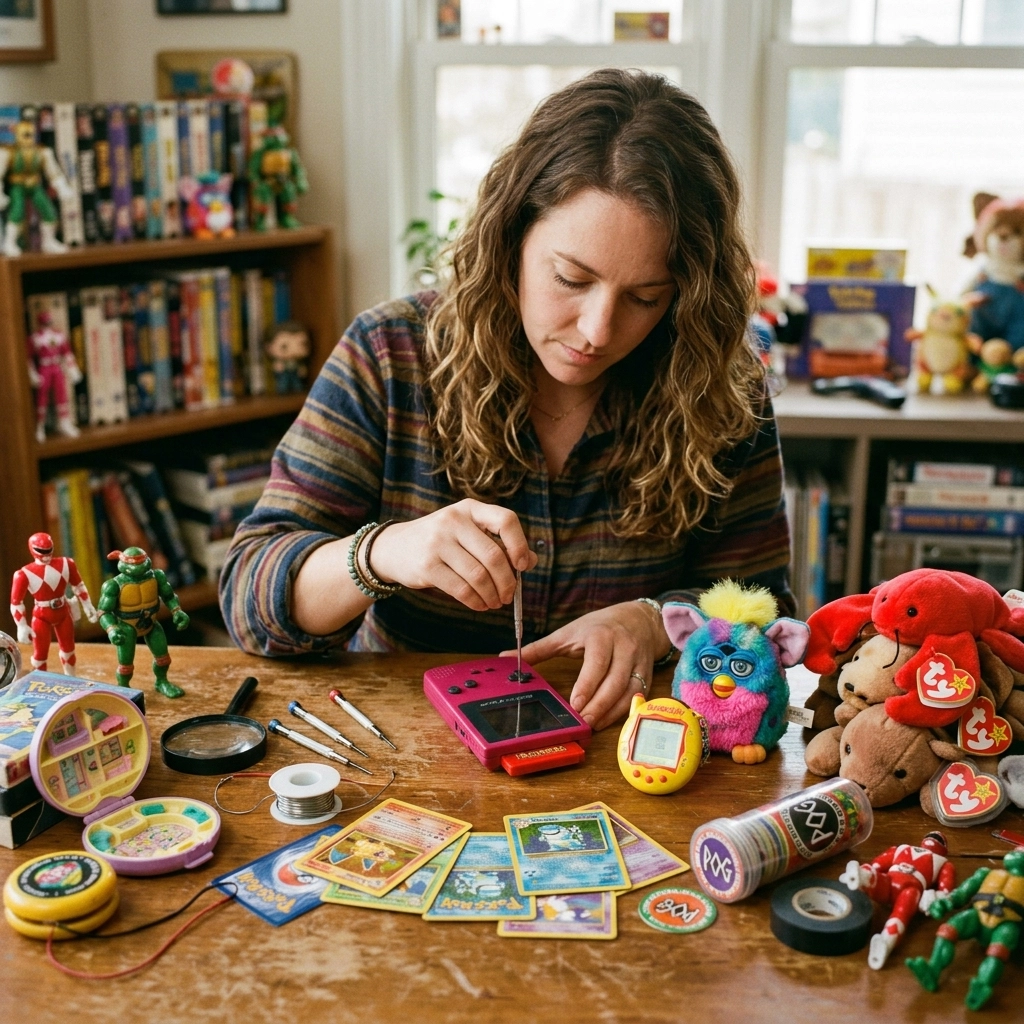
Remember the sound of a dial-up modem screaming into the void? The smell of a freshly opened pack of Pokémon cards? Or the sheer, unadulterated stress of trying to keep a digital pet alive during math class?
If you grew up in the 90s, your bedroom was likely a goldmine of plastic, silicon, and neon-colored dreams. Back then, we played with these things until the buttons fell off. Today, those same “toys” are fueling a massive nostalgia market that has collectors reaching for their wallets faster than you can say “Cowabunga!”
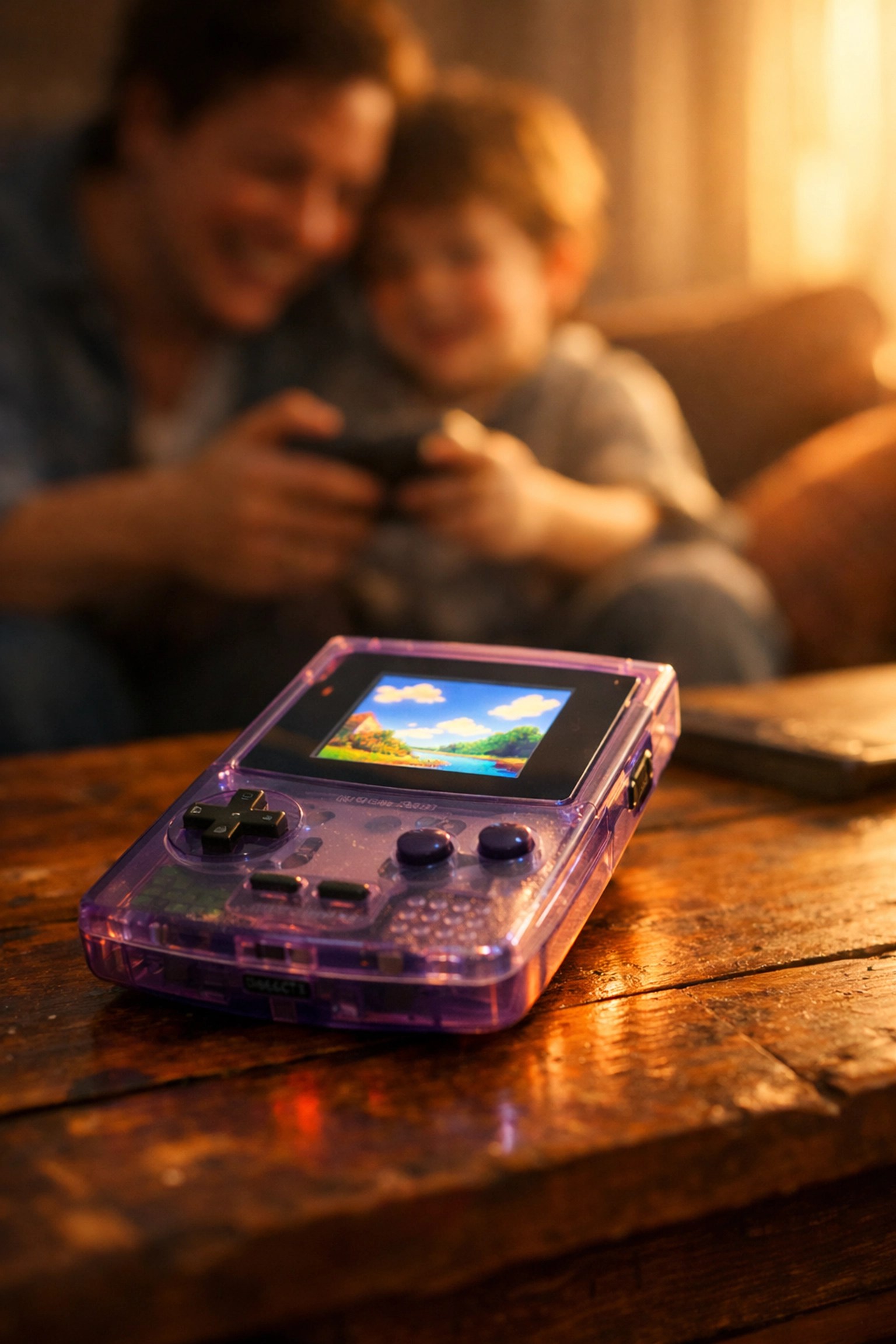
At Second Wind Sales and Services, we see a lot of modern tech, but our hearts skip a beat when someone walks in with a dusty translucent purple Game Boy Color. It’s not just a piece of plastic; it’s a time machine. But before you go digging through your parents’ attic in Edmonton, let’s look at what those childhood treasures are actually worth today, and why a little “Second Wind” repair might be the difference between a payday and a paperweight.
The Heavy Hitters: Gaming Consoles and Handhelds
If you were a cool kid in 1996, you probably had a Nintendo 64 or a Sega Genesis hooked up to a chunky CRT television. At the time, these consoles cost a couple of hundred bucks. Today? The market is wild.
The Game Boy Legacy
The original “Grey Brick” Game Boy was a marvel of its time. While you can find beat-up ones for $50–$100, a mint-condition, original Game Boy in its box can fetch north of $1,000. And if you happen to have a sealed copy of Super Mario 64 for the N64? Well, one of those sold for a staggering $1.56 million at auction.
Pro-tip: Even if yours looks like it went through a blender, don’t toss it! Most 90s handhelds suffer from “screen rot” or “dead capacitors.” These are things we can often fix here at the shop.
Sega Genesis & Super Nintendo
The 16-bit wars were real. Whether you were Team Sonic or Team Mario, these consoles are now high-value collectibles. A clean, working Sega Genesis with the original cables is a staple for any retro setup. The problem? Those old power bricks are about as reliable as a screen door on a submarine. They get hot, they fail, and they can occasionally fry the console.
The “Weird” Phase: Furbies and Tamagotchis
The 90s were a strange time for artificial intelligence. We invited owl-like robots into our homes that whispered in the middle of the night (nightmare fuel, honestly) and carried around egg-shaped keychains that demanded food every three hours.
- Furbies: While most common Furbies sell for $20–$50, certain rare editions (like the Kid Cuisine Furby or the Bejeweled Furby) can reach values of $1,000 or more.
- Tamagotchis: Original 1996 Tamagotchis in their original packaging are a hot commodity. Depending on the shell design, you’re looking at anywhere from $100 to $500.
The biggest enemy of these toys isn’t time; it’s leaking batteries. If you left those AA batteries in your Furby back in 1998, there’s a good chance they’ve leaked “battery acid” (alkaline discharge) all over the motherboards.
The Collectible Craze: Pokémon and Beanie Babies
We can’t talk about the 90s without the big two.
Pokémon Cards
The Pokémon TCG (Trading Card Game) changed everything. We all remember that one kid at school who claimed to have a holographic Charizard. If they actually kept it in mint condition, they’re laughing now. A first-edition holographic Charizard can fetch over $5,000, with some pristine versions hitting six figures. Even “common” first-edition sets are ranging between $4,600 and $8,700.
Beanie Babies
Okay, we all know the Beanie Baby bubble “burst,” but that doesn’t mean they’re worthless. While your common “Halo the Bear” might only buy you a cup of coffee, rare errors or commemorative versions like the “Princess Diana” bear have sold for as much as $10,000.
The “I Wish I Kept That” Feeling (and the “I Found It, But It’s Broken” Reality)
There’s nothing worse than finding your old Sega Saturn or Polly Pocket set, flipping the switch, and… nothing. No lights, no sound, just the cold silence of dead tech.
Most people assume that if an old gadget doesn’t turn on, it’s “garbage.” Stop right there! In the world of vintage electronics, “broken” is often just a temporary state.
Common Issues We Fix:
- Battery Corrosion: That blue-green crusty stuff inside the battery compartment? It’s like rust for electronics. It eats away at the metal contacts and can even destroy the copper traces on the circuit board. We use specialized cleaning agents and precision soldering to bridge those gaps and bring the power back.
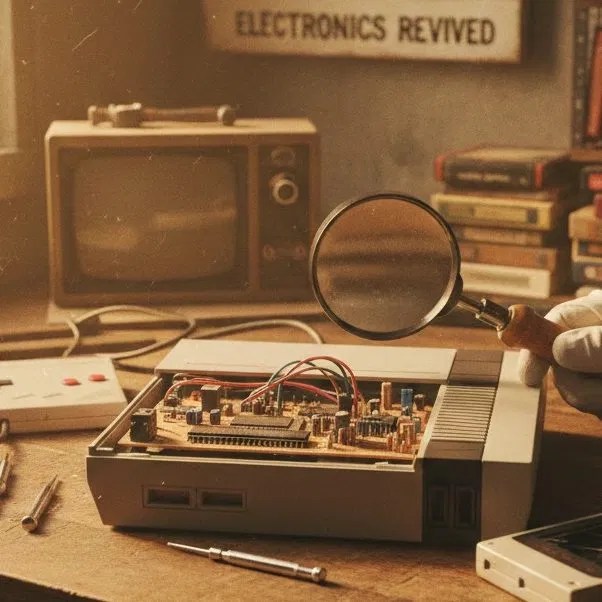
- Dried-out Capacitors: Capacitors are like little buckets that hold electricity. After 30 years, the liquid inside them dries up or leaks. It’s the number one reason why old consoles lose sound or have “wavy” video. Replacing these is bread-and-butter for a skilled technician.
- Broken Screens: From cracked Game Boy screens to dim LCDs on Tamagotchis, we can often source replacement parts or perform “backlight mods” that actually make the toy better than it was in 1995.

Why Fixing Beats Replacing
Aside from the potential resale value, there’s the sustainable living aspect. We’re big on “Right to Repair” here at Second Wind. Every vintage console we save from a landfill is a win for the environment and a win for history.
Plus, there’s the “cool factor.” Imagine showing your kids exactly what you used to play with: and having it actually work. That’s worth more than any eBay listing.
The “Hard Way” vs. The “Second Wind Way”
The Hard Way:
You find a vintage Game Boy. You try to pry it open with a kitchen knife because you don’t have the “tri-wing” screwdriver. You accidentally snap a ribbon cable. You try to solder a connection with a giant iron you bought at a hardware store and end up melting the plastic shell. Now, your $200 treasure is a $0 piece of junk.
The Second Wind Way:
You bring it to us. We use professional-grade microscopes, precision soldering stations, and decades of “tech wizardry” to diagnose the issue. We treat your childhood memories with the respect they deserve. We’ll tell you straight up if it’s fixable and what it will cost.
When It’s Really, Truly Gone
Sometimes, a piece of tech is just too far gone. Maybe it was stored in a damp basement in St. Albert for twenty years, and the motherboard has turned into a science experiment.
If your 90s treasures are beyond saving, don’t throw them in the trash! Electronic waste is a massive problem. As a dedicated electronics recycling center, Second Wind Sales and Services ensures that even the “deadest” tech is disposed of responsibly. We strip out the usable parts to save other consoles and recycle the raw materials (like gold, copper, and plastic) so they don’t end up leaching chemicals into our local soil.
Revive Your Childhood Today
Whether you’re looking to cash in on the collector market or you just want to hear the SEGA! startup sound one more time, we’re here to help. Our shop is a judgment-free zone for geeks, collectors, and anyone who just misses the simpler times of the 90s.
Got an old console, a box of “broken” toys, or a computer that’s older than your kids? Bring it in. Let’s see if we can give it a Second Wind.
Ready to see if your treasure can be saved?
Check out our repair services or drop by the shop. We’re always happy to talk shop, swap Pokémon stories, or help you figure out if that Beanie Baby is your ticket to early retirement (no promises on that last one, though!).
Stay nostalgic, stay sustainable, and for heaven’s sake: take the batteries out of your old electronics before you put them in storage!
Leave a Reply