
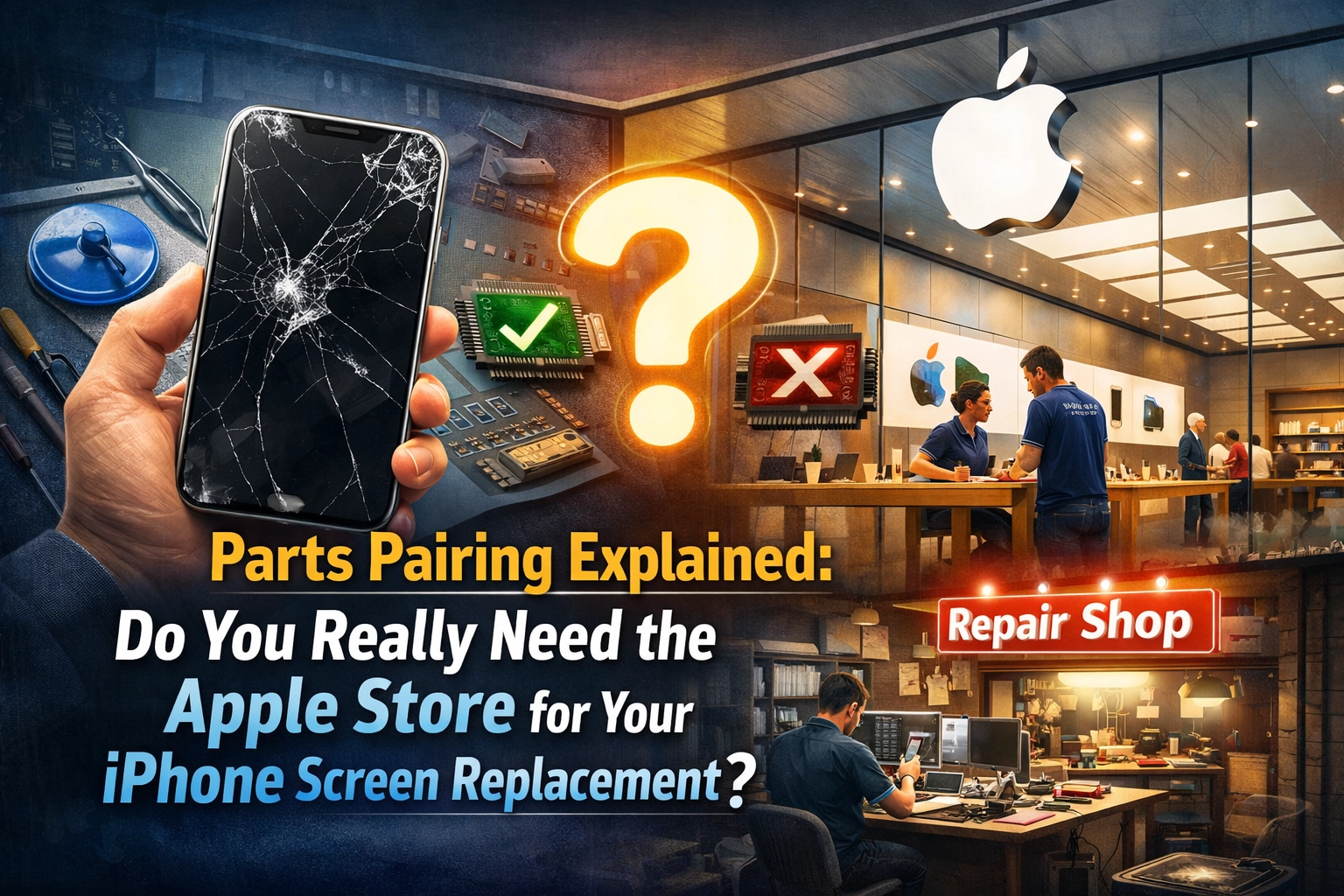
We’ve all been there. You’re stepping out of the truck, or maybe you’re just trying to juggle a coffee and a toddler, and crunch. Your iPhone takes a swan dive onto the pavement. It’s a heart-sinking feeling, kind of like realizing you left your heater off during an Alberta cold snap. Once you get over the initial shock, your mind goes straight to the fix.
For a long time, the common wisdom was: “Take it to the Apple Store or it’ll never work right again.” You’ve probably heard horror stories about FaceID breaking or weird warning messages popping up after a quick iphone screen replacement. This isn’t just bad luck, it’s a process called “parts pairing.”
But here at Second Wind Sales and Services, I want to pull back the curtain on this technical wizardry. Things are changing in the repair world, and it’s mostly good news for your wallet and the planet. So, do you really need to make a pilgrimage to the mall and wait three hours for a “Genius” to see you? Let’s break it down.
What on Earth is Parts Pairing? (The Digital Handshake)
Imagine you bought a brand-new set of tires for your truck, but the truck refused to drive because it didn’t “recognize” the serial numbers on the rubber. Sounds ridiculous, right? Well, that’s essentially what parts pairing is for electronics.
Apple designs their iPhones so that individual components, the screen, the battery, the camera, are digitally “serialized” to the logic board (the brain) of the phone. When we perform an iphone screen replacement, the phone checks to see if the new screen has the “secret handshake” it’s looking for. If it doesn’t recognize the part, it might disable features like True Tone (which adjusts the screen color) or show you a nagging notification that says the part isn’t “genuine,” even if it’s a high-quality original part taken from another iPhone.
Pro-tip: This isn’t always about Apple being “mean.” Some of it is for security, like making sure someone can’t just swap your FaceID sensor to get into your bank app. But for a screen? It’s mostly about keeping the repair process under their thumb.
The iOS 18 Revolution: A Breath of Fresh Air
If you’re a regular around here, you know we’re big fans of keeping tech out of the landfill. That’s why we also act as an electronics recycling center. We hate seeing perfectly good hardware go to waste just because a software lock said “no.”
The big news is that with the release of iOS 18, Apple finally blinked. For the newer models, specifically the iPhone 15 and the brand-new iPhone 16, Apple introduced a tool called “Repair Assistant.”
In the past, only Apple or their authorized shops could “calibrate” a new part. Now, if we swap a genuine screen onto your iPhone 15, you can actually run the calibration yourself right in the settings. It’s a huge win for the Right to Repair movement and for local shops like us. It means we can give you that factory-perfect finish without the factory-inflated price tag.
The Catch: It’s Not All Sunshine and Rainbows
Now, I’m not a miracle worker, and there’s still some fine print you need to know about.
- The Model Gap: If you’re rocking an iPhone 14, 13, or older, you’re still in the “Old West” of parts pairing. These phones don’t have the fancy new Repair Assistant. If we swap a screen on these models, you might still see that “Unknown Part” message, even if the screen works perfectly.
- The Activation Lock: This is the big one. If a replacement screen comes from a phone that was marked as “Lost” or “Stolen” (Activation Locked), the pairing will fail. This is actually a good thing, it keeps the market for stolen phones down, but it means you have to be careful about where your parts come from. We source our parts ethically, so you don’t have to worry about your phone suddenly becoming a brick.
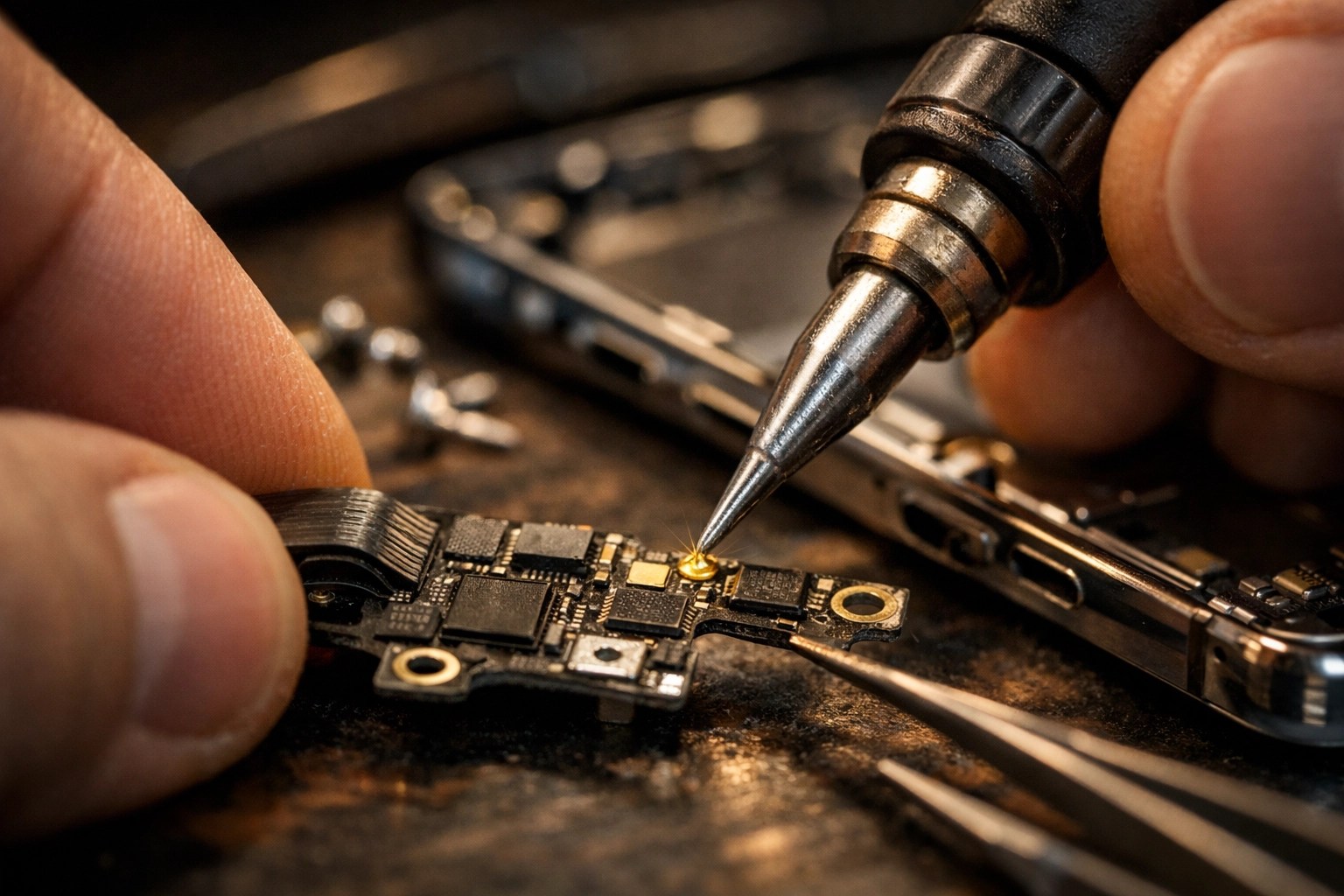
- The Sensor Cable: On many iPhones, the screen and the sensor cable (the bit that handles FaceID) are married together. If you replace just the glass and not the cable, or vice versa, things get grumpy. This is where the “The Hard Way” comes in, microsoldering.
Why Choose a Local Shop Like Second Wind?
I know what you’re thinking: “If it’s this complicated, maybe I should just go to the Apple Store.” Hold your horses! There are some major perks to staying local for your phone repair near me.
1. We Actually Care About Your Data
At the big-box stores, their first step is often “factory reset.” If you haven’t backed up your photos of the grandkids or that video of your cat doing a backflip, they might be gone forever. We treat your data like it’s our own. We try to work around your files whenever possible.
2. We Can See the Small Stuff
Sometimes a screen isn’t just a screen. Using our high-end electronics microscope, we can see if there’s corrosion on the board or a tiny component that’s knocked loose. A “Genius” might just tell you that you need a whole new phone. We’d rather fix what’s broken and get you back on your way.

3. The “Neighborly” Price Tag
Apple’s pricing is designed to make you consider buying a new phone instead of fixing your old one. We’re the opposite. We want your tech to have a “Second Wind.” Our goal is to make the repair so affordable that it’s a no-brainer to fix it rather than toss it.
The Environmental Side of the Coin
This is where I get a bit geeky and sentimental. Every time someone chooses to repair an iPhone rather than replace it, we’re saving a massive amount of energy and raw materials.
If a phone truly is beyond saving, maybe it fell into a grain auger or got run over by a Zamboni, we don’t just throw it in the trash. As a local electronics recycling center, we make sure every board, battery, and bit of glass is handled responsibly. We salvage the good parts to help fix other phones (thanks to that new iOS 18 pairing update!) and recycle the rest.
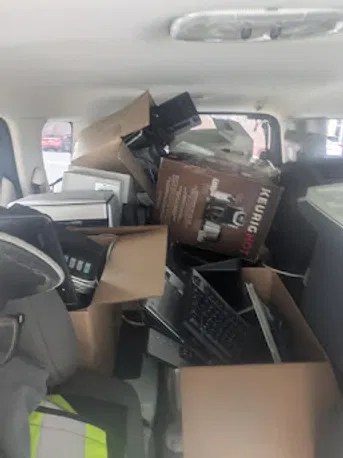
Pro-tip: Don’t just toss your old electronics in your kitchen bin. The batteries can actually start fires in garbage trucks. Bring them to us instead!
The Easy Way vs. The Hard Way
When it comes to your broken screen, you’ve got options:
- The Easy Way (for you): Bring it to us. We diagnose it, explain the parts pairing situation for your specific model, and give you a flat quote. You go grab a coffee, come back, and your phone is as good as new.
- The Hard Way (DIY): You can order a kit online. You’ll need a heat gun, steady hands, and a lot of patience. If you’re a tinkerer, go for it! But be warned: one slip of the pry tool can turn a screen repair into a “dead phone” repair very quickly.
If you do decide to go the DIY route and things go sideways, don’t be embarrassed to bring the “bag of parts” to me. I’ve seen it all, and I promise not to say “I told you so.”
Wrapping It Up
So, do you need the Apple Store for your iphone screen replacement? In 2026, the answer is a resounding “No.”
Thanks to better software and a growing community of independent technicians who actually care about their craft, you have more choices than ever. Whether you have the latest iPhone 17 or a trusty old iPhone 12, there’s a way to get it fixed that’s fast, fair, and friendly.
If your screen is looking more like a spiderweb than a display, come see us at Second Wind Sales and Services. We’ll talk tech, look at some cool stuff under the microscope, and get your digital life back on track.
Check out our full list of services or drop by the shop. We’re always happy to help a neighbor out!
Leave a Reply