
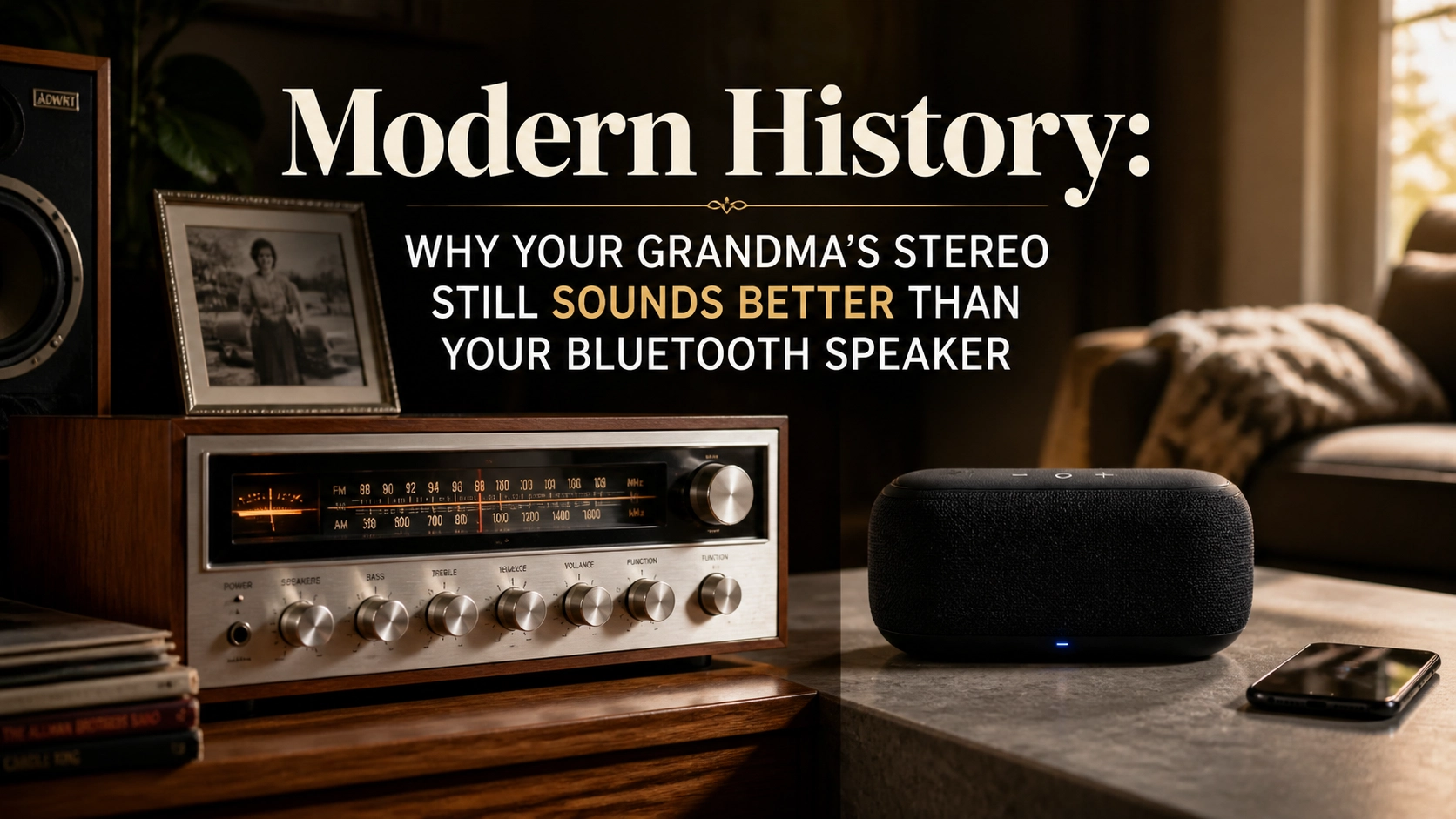
If you grew up anywhere near Southern Alberta, you know the sound of a “Second Wind.” Usually, it’s that sudden gust of chinook air that rattles the siding on your house in Raymond or shakes the windows in Lethbridge. But there’s another kind of “second wind” we’re obsessed with here at the shop: the moment an old, dusty piece of 1970s audio gear coughs back to life, fills the room with a warm, golden glow, and starts singing like it never stopped.
We’ve all been there. You’ve got your sleek, $150 Bluetooth speaker sitting on the counter. It’s the size of a soda can, it glows blue, and it connects to your phone in three seconds flat. It’s convenient. It’s portable. And frankly, compared to your grandma’s 40-pound walnut-veneered floor speakers, it sounds like a kazoo playing inside a Pringles can.
Why is that? Why does a piece of technology built when disco was king still outperform the “cutting-edge” gadgets of 2026? Put on your favorite record (or just imagine the crackle), because we’re diving into the physics of soul, the tragedy of the “throwaway” economy, and why your ears are craving a trip back in time.
The Physics of “Warmth”: Analog vs. The Digital Squeeze
When we talk about vintage audio, the word “warmth” comes up a lot. It’s not just a buzzword used by guys with waxed mustaches; there’s actual science behind it.
Modern Bluetooth speakers are miracles of compression. To get music from your phone to that little speaker wirelessly, the data has to be squeezed. Imagine trying to fit a whole Thanksgiving dinner into a lunchbox, you’re going to lose the mashed potatoes and the cranberry sauce along the way. Digital audio takes a smooth, flowing sound wave and turns it into a series of “on” and “off” steps.
Vintage gear, especially the stuff using vacuum tubes or high-quality discrete transistors, doesn’t “step.” It flows. It’s analog, meaning it represents the sound wave as a continuous electrical signal. When your grandma’s stereo plays a cello suite, you aren’t just hearing notes; you’re hearing the wood of the instrument vibrate. That “warmth” is actually a type of harmonic distortion that our human ears find incredibly pleasing. It feels “thick” and “real,” like a home-cooked meal at the Galt Museum cafe versus a protein bar you found in your glovebox.
Built Like a Tank (Because It Had To Be)
There was a time when buying a stereo was a life event. You didn’t just grab one at a big-box store while buying laundry detergent. You saved up. You researched. You bought a piece of furniture that happened to play music.
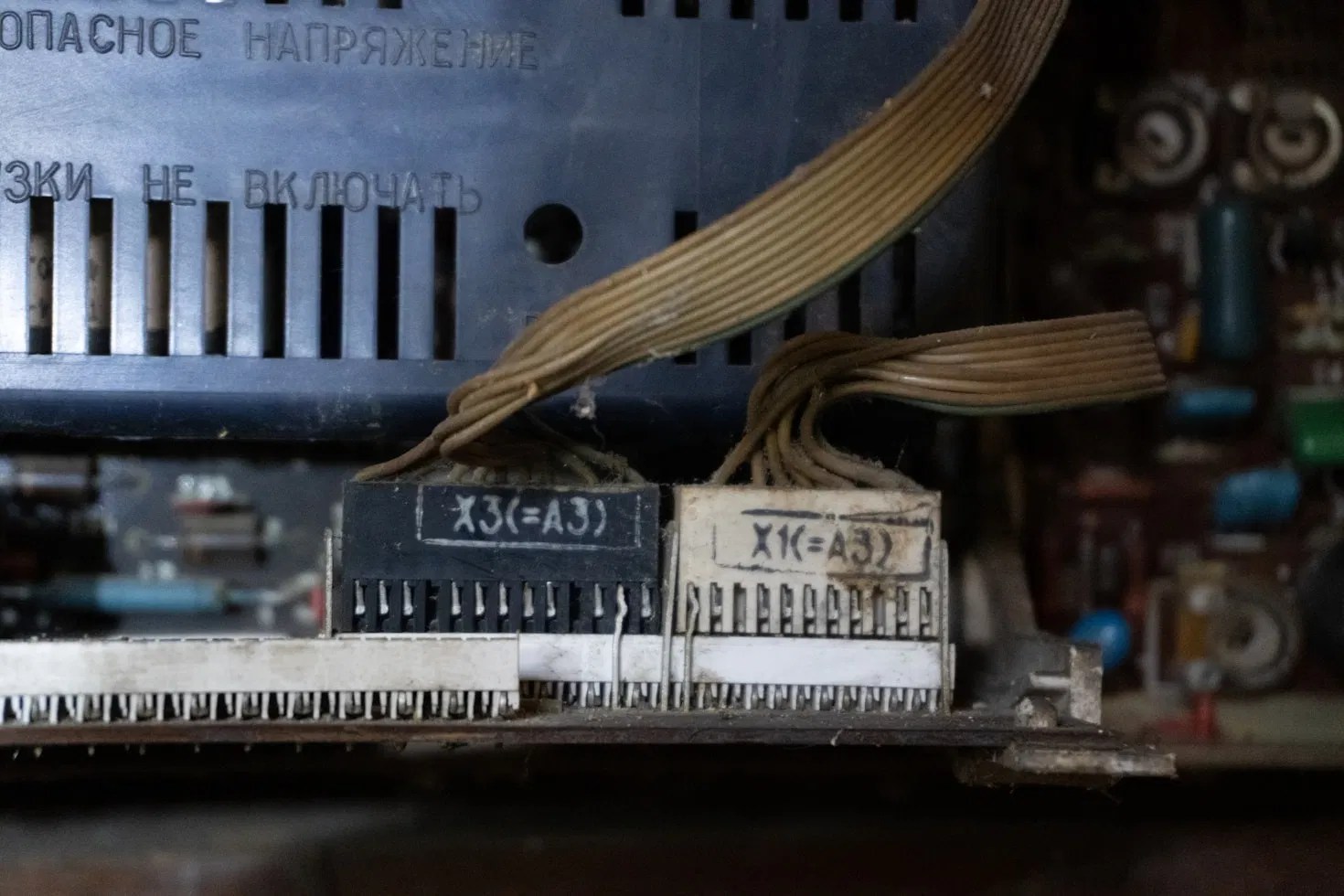
The craftsmanship in vintage gear is staggering. We’re talking about real wood cabinets that act as acoustic chambers. We’re talking about heavy-duty transformers and capacitors that were designed to last for decades, not just until the next iPhone release.
In the modern world, most electronics are designed for “planned obsolescence.” They want you to buy a new speaker every two years. The batteries die, the Bluetooth version becomes “unsupported,” or the plastic casing cracks if you look at it funny. But Grandma’s Marantz? That thing was built with the same philosophy we have here at Second Wind: Repair, Reuse, Revive.
Pro-Tip: If you find an old stereo at a garage sale in Magrath and it weighs more than a small dog, buy it. Weight usually equals a massive power transformer, and power equals “headroom”, the ability for your music to sound loud without sounding distorted.

The “Soul” of the Stereo: Why We Love the Ritual
Let’s be honest: part of why the old gear sounds better is because we listen to it differently.
When you use a Bluetooth speaker, you’re usually doing three other things. You’re washing dishes, scrolling through TikTok, or trying to ignore the wind howling off the prairies. It’s background noise.
When you walk over to a vintage setup, flip the heavy silver toggle switch (that “clunk” is soul-satisfying), and wait for the tubes to glow, you’re making a commitment. You’re choosing to experience the music. It’s the difference between a quick text and a hand-written letter. That intentionality makes the music sound better because you are more present.
At Second Wind, we see a lot of people bringing in vintage tech for restoration. They aren’t just trying to save money; they’re trying to save a feeling. They remember being five years old, lying on the rug, and watching the needles bounce on the VU meters. You can’t get that from a glowing LED ring on a smart speaker.
The Tragedy of the Landfill (and How We Stop It)
Every time a Bluetooth speaker dies because its internal lithium battery turned into a “spicy pillow,” it usually ends up in the trash. That’s a tragedy for the environment and for your wallet.
Vintage gear is almost entirely repairable. Because it was built with individual components, resistors, capacitors, and transistors, we can actually get in there with a soldering iron and fix what’s wrong. We don’t just “swap the board” and charge you the price of a new unit. We diagnose, we desolder, and we bring the life back.
This is part of our broader mission for sustainable living. Keeping a 50-year-old Pioneer receiver out of the Alberta e-waste system isn’t just “quirky”, it’s responsible. Plus, it looks a whole lot cooler on your shelf than a gray plastic cylinder.
“But Penny, I Like My Wireless Freedom!”
Look, I’m not a miracle worker (and I’m definitely not a Luddite). I know you want to play Spotify from your phone. I get it. The good news? You can have your vintage cake and eat it, too.
One of our favorite things to do at the shop is “Modernizing the Masterpiece.” We can take a vintage stereo and add a high-quality Bluetooth receiver or a Wi-Fi streamer to the “Aux” input. Now, you get the earth-shaking power and warm analog tone of the 1970s, controlled by the phone in your pocket. It’s the best of both worlds. It’s like putting a modern engine in a ’67 Chevy, classic style, modern reliability.
Bringing the Magic Back to Southern Alberta
There’s something about the wide-open spaces of Southern Alberta that demands a big sound. Whether you’re out in Raymond, Cardston, or right here in Lethbridge, your home deserves a sound system that fills the space with character.
If you’ve got an old unit gathering dust in the basement, maybe it hums a bit, or the left channel drops out, or the “wood” is looking a little thirsty, don’t toss it. Bring it in. We treat every piece of vintage gear like a piece of history because, well, it is. We’ll give it that “Second Wind” it deserves.
The Second Wind Verdict
At the end of the day, your grandma’s stereo sounds better because it was designed to be excellent, not just convenient. It was designed to be a centerpiece of the home, a hub for stories, and a survivor.
In a world of disposable tech and tiny, tinny speakers, we’re choosing to stand with the heavyweights. We’re choosing the crackle, the glow, and the craftsmanship.
Got a vintage treasure that needs some TLC? Or maybe you’re looking to start your analog journey? Come see us at Second Wind Sales & Services. We’re not just fixing gadgets; we’re keeping the “soul” of Southern Alberta’s music alive.
Wait, did you really read this far? You’re definitely one of our people. If you’re curious about what else we can revive, check out our work on vintage cameras or see how we’re saving classic gaming consoles from the great digital beyond. See you at the shop!
Leave a Reply